Why wait for automation?
There's an odd contradiction in enterprise automation. The industry promises to take work off people's hands, but first asks them to spend months explaining exactly how they do it.
At Modolab, we're developing a different approach to tackling complex workflows. Rather than spending months trying to understand every step before building anything useful, we're exploring how AI assistance can make people's work easier from day one, while helping us understand how to automate more of it.
It's not about avoiding discovery or pretending every process can be learnt simply by observing it. It's about changing when and how that discovery happens, and making the work useful along the way.
What if the first stage of automation could start paying for itself, while helping us build the rest?
The value shouldn't have to wait
There's a tendency to treat automation as the destination, with everything before it considered preparation. Understand the process. Document the rules. Build the solution. Deliver the value.
But why should those things happen in that order?

Much of the work we're trying to automate can already be made significantly easier, even if we're not yet ready to remove human involvement entirely.
An assistant working alongside someone can take on repetitive tasks, gather information, prepare outputs and handle the heavy lifting. People still provide direction and make decisions where needed, but the work demands far less of their time.
That's useful from the beginning. Not a prototype waiting to become valuable, but something doing real work.
There's another benefit developing alongside it.
The work helps build the automation
Complex workflows involve more than following a series of steps. People make decisions, handle exceptions and adapt to different circumstances, often relying on knowledge they've built up over years.
The variations, exceptions and decisions that people make without necessarily thinking twice. Trying to document every possibility upfront is difficult enough. Expecting people to remember them all in a workshop is another matter. But when an assistant is actively helping with the work, those situations arise naturally.
A user gives an instruction, corrects an output or explains an exception. The system can capture what happened, which actions were taken and why something needed to be done differently.

Over time, these interactions provide evidence of how the workflow operates. Recurring decisions can be identified, rules validated and exceptions understood.
Of course, observing something doesn't automatically make it correct. That knowledge still needs reviewing and testing before it becomes part of an automated process.
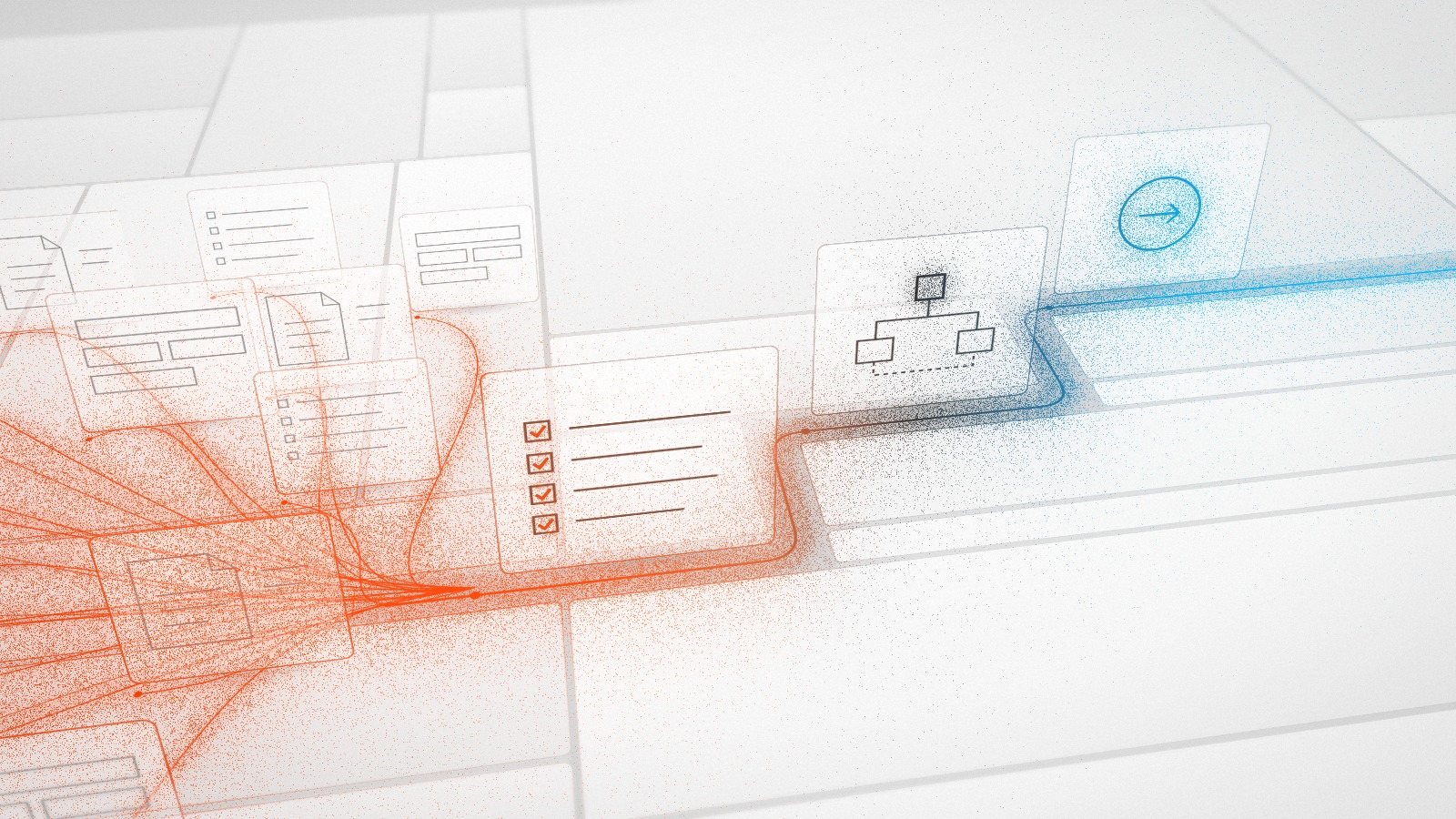
Instead of spending months understanding a process before delivering anything, we can start making the work easier from day one. Every interaction then helps us understand what can be automated next. We're not just delivering value while building automation. The work itself is helping us build it.
Two outcomes, one approach
This is where we see a particularly interesting opportunity for complex enterprise automation. The first outcome is productivity. People spend less time on repetitive work, with assistance becoming more useful as the system develops a better understanding of the tasks involved. The second is automation readiness. Each validated rule, decision and exception helps establish what can eventually happen without human instruction.
Both outcomes can develop together.
As the understanding improves, more of the workflow can move towards autonomous execution, with appropriate permissions, controls and human oversight. Some tasks will get there quickly. Others will take longer. Some may always need a person involved. That's fine. The business has been getting value throughout, rather than waiting for the entire workflow to be understood and automated.

A different starting point
For complex enterprise workflows, this could change the economics of automation. Rather than investing heavily in understanding a process before seeing any return, businesses can begin recovering time and reducing manual effort while the foundations for greater automation are being established.
The longer-term opportunity is just as important. Every validated decision, exception and rule brings more of the workflow within reach of autonomous execution.
We shouldn't have to choose between making work easier today and automating it tomorrow. The same investment should help us do both.